
The Psychology of Branded Merchandise: Why Physical Items Stick
- bbinnig
- Dec 5, 2025
- 6 min read
Updated: Dec 9, 2025
Understanding the Emotional Power of Tangible Brand Experiences
Scroll. Swipe. Click. Repeat.
In our digital reality where brands fight for milliseconds of attention, it’s easy to overlook the remarkable impact of physical brand touchpoints. Digital ads appear, disappear, and are quickly forgotten—but a tangible object? That’s remembered. Kept. Used. Talked about. Sometimes for years.
This is why branded merchandise remains one of the most powerful and enduring tools in modern marketing. Beneath the surface-level practicality of swag lies something deeper—psychology, emotion, memory, and identity.

This article dives into the cognitive and emotional science behind tangible brand experiences, exploring why physical items create stronger and longer-lasting connections than purely digital interactions. We’ll examine the principles of emotional branding, the psychological triggers activated by merchandise, and the real reason why customers often form lasting attachments to branded gifts.
Why Physical Items Leave a Deeper Impression Than Digital Messages
A digital ad activates one sense—sight.
A physical product activates many:
✔ Touch
✔ Sight
✔ Temperature
✔ Texture
✔ Sound (unboxing, opening, wearing)
Even smell (leather, fabric, packaging material).
Because physical items stimulate more sensory pathways, the brain encodes them more deeply, giving them a stronger foothold in long-term memory.
In psychology, this is known as multi-sensory integration—the more senses involved in an experience, the more meaningful and memorable it becomes.
Tangible Brand Experiences Trigger “Embodied Cognition”
We don’t just think with our brains—we think with our bodies. Holding a mug with your logo, or wearing your branded hoodie, creates small but meaningful associations:
The warmth of the mug becomes warmth toward the brand.
The comfort of the hoodie becomes comfort with the brand.
The durability of the bottle becomes trust in the brand.
This is why brands invest in high-quality merchandise. How something feels physically influences how the brand feels emotionally.
"The Strategic Power of Branded Merchandise" in a Digital-First World
The Science of Emotional Branding and Why It Works So Well With Merchandise
Digital marketing delivers information.
Merchandise delivers emotion.
Emotional Branding Creates a Psychological Shortcut
People don’t stay loyal to brands—they stay loyal to the feelings brands generate.
Branded merchandise influences these emotions more powerfully than content alone because it creates a lasting, physical signal of:
Appreciation
Recognition
Belonging
Identity
Status
Trust
When customers receive an item that feels thoughtful and well-designed, it triggers positive emotional responses long before logic kicks in.
Merchandise Extends Feelings Over Time
Ads create momentary emotions.
Products create extended emotions.
A customer may use a branded water bottle hundreds of times. Each use reinforces:
“I like this brand. This brand values me.”
This is the subtle but powerful essence of emotional branding—consistent emotional reinforcement through everyday interactions.
Why the Psychology of Branded Gifts is Rooted in Reciprocity
When someone receives a gift—branded or not—it activates one of the oldest and strongest social instincts: reciprocity.
The Reciprocity Principle
Psychologists have long known that humans feel obligated to return favors. Even small gifts can trigger:
Positive sentiment
Increased cooperation
Higher engagement
Loyalty
A desire to support the giver
This principle is the driving force behind much of relationship marketing. But with merchandise, it becomes even more powerful because the “gift” is both practical and symbolic.
When a brand gives a customer a useful, good-quality item, the customer often feels:
“I want to support this company again.”
“I want to stay connected to them.”
“I trust them.”
This emotional reflex becomes a loyalty driver that digital ads cannot replicate.
How Branded Items Become Symbols of Identity and Belonging
Humans are tribal by nature. We seek belonging, alignment, and shared identity.
When someone wears a brand’s hat, shirt, or bag, it signals to others (and to themselves):
I believe in what this brand stands for.
I’m part of this community.
This brand fits who I am.
This mechanism explains why fans wear sports apparel proudly or why employees love company-branded gear—these items symbolize membership.
Identity Signaling in Action
For customers, branded merchandise often serves as:
A badge of affiliation
A statement of values
A reflection of lifestyle
A community marker
These identity-driven connections are the bedrock of deep brand loyalty.
Physical Items Create Memory Anchors Through Repetition
Memory is strengthened through repetition—and there is no more organic form of repetition than merchandise used in everyday life.
Each use subtly reinforces the brand’s presence in the customer’s mind.
The Mere-Exposure Effect
A famous psychological principle states that the more we see something, the more we like it.
Branded merchandise turns this into a loyalty engine.
If a customer sees your logo:
Every morning while drinking coffee
Every afternoon at the gym
Throughout the workday on their desk
During travel, errands, routines
Your brand becomes familiar, trusted, and preferred—without additional marketing spend.
Why Unboxing Experiences and Presentation Elevate Emotional Impact
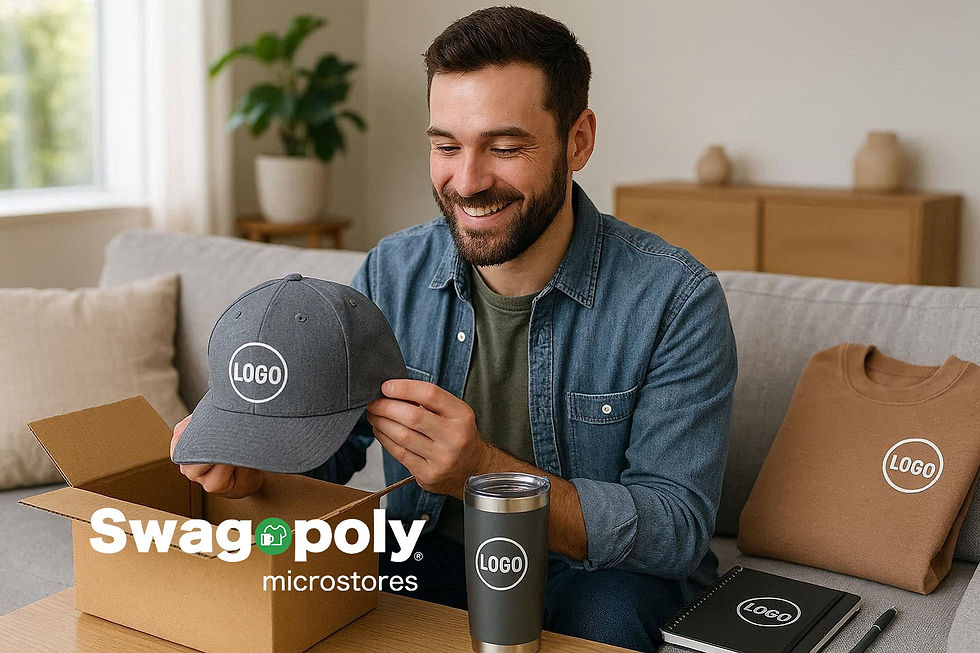
The psychology of branded gifts starts long before the item is used—it begins the moment it’s opened.
A beautiful presentation triggers:
Anticipation
Excitement
Elevated perceived value
Positive emotional imprint
Unboxing creates a ritual, and rituals deepen emotional connection.
Brands like Apple perfected this—but any company can leverage the same principles with thoughtful packaging.
First Touch = First Impression
A cheap-feeling product can damage brand perception.
A well-crafted product can elevate it.
This is why quality matters—not just in the product itself, but in the experience of receiving it.
The Endowment Effect: Why People Value Items Simply Because They Own Them
One of the most surprising insights in behavioral psychology is that people place higher value on objects once they own them.
This is called the Endowment Effect.
Here’s how it applies to branded merchandise:
Once a customer receives your item, they subconsciously feel:
Attached to it
Protective of it
More positive toward your brand
Less likely to switch to a competitor
Even something small—like a pen or keychain—can trigger this effect.
But higher-quality items amplify it significantly.
Tangible Items Reduce Perceived Distance Between Customer and Brand
Psychologically, physical products make brands feel more human.
Digital communication can feel abstract and distant.
Merchandise feels personal and close.
Physical Contact = Perceived Relationship
When customers touch or hold something with your brand on it, it reduces the emotional “distance” they feel from your company.
This effect is so strong that many brands integrate merchandise into:
Onboarding
Customer retention programs
Upsell campaigns
Community-building
Loyalty programs
The result?
Stronger relational bonds and improved customer lifetime value.
Why Quality Matters More Than Quantity in Emotional Brand Connections
Bad swag hurts.
Cheap-feeling items can damage trust, cheapen the brand, and weaken emotional engagement.
But high-quality, well-designed items create the opposite effect:
Pride of ownership
Positive association
Long-term use
Extended brand visibility
For emotional branding to work, the product must feel:
Useful
Durable
Desirable
On-brand
Aesthetically appealing
You’re not giving away a product—you’re giving away a piece of your brand’s identity.
How Companies Can Leverage These Psychological Drivers Through Swag
Brands that use merchandise successfully do so because they understand the psychology behind it.
Here’s how to intentionally activate these psychological triggers:
1. Choose products customers actually want.
Usefulness boosts emotional value.
2. Prioritize quality and durability.
Longevity = repeated emotional reinforcement.
3. Align swag with your brand identity.
Colors, messaging, and product categories should feel “on brand.”
4. Create experiences, not items.
Packaging, notes, presentation, and context matter.
5. Make merchandise feel earned or exclusive when possible.
Exclusivity increases perceived value.
6. Use merchandise as a relationship tool—not a giveaway.
The intention behind the gift matters.
7. Measure emotional impact, not just usage.
Ask customers how merchandise made them feel—not just whether they used it.
This psychological approach is what transforms ordinary swag into meaningful brand touchpoints.
The Power of Tangible Memory and Emotional Connection
Branded merchandise resonates because it reflects how humans are wired. We are sensory creatures who form emotional attachments to physical objects—especially when those objects make us feel valued, included, and recognized.
This is why the psychology of branded gifts is so powerful:
It taps into reciprocity, identity, memory, and emotion.
It turns brands into something customers can hold.
Something they can use.
Something they can feel.
And in an era of digital noise, this tangibility is not just a novelty—it’s a competitive advantage.

Brands that master the art of tangible brand experiences create deeper loyalty, stronger memories, and more meaningful relationships than digital marketing alone could ever achieve.


Comments