
High-Quality Branded Gifts Create Lifelong Fans
- bbinnig
- Dec 5, 2025
- 6 min read
Updated: Dec 9, 2025
From Freebies to Favorites
In an age where customers can switch brands with a single click, loyalty has become one of the most valuable commodities in business. Companies invest heavily in digital ads, retention campaigns, CRM automation, and loyalty programs—all attempting to keep customers coming back.
One strategy consistently outperforms them all in emotional impact, memorability, and long-term engagement:
Thoughtfully designed branded merchandise.
Not the cheap stuff.
Not the “hand-it-out-and-hope-it-works” swag.
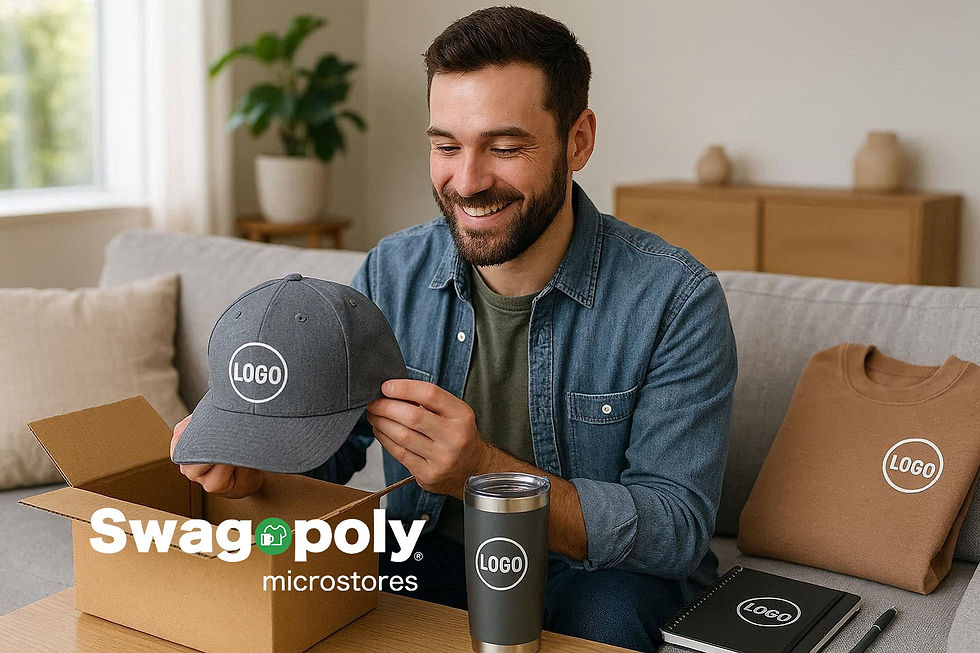
But intentionally selected, well-crafted customer loyalty merchandise that customers actually use, enjoy, and remember.
When done right, merchandise becomes more than a giveaway—it becomes a bridge between brand and customer, reinforcing trust, identity, and appreciation in a tangible way.
This review explores how companies turn branded merchandise into powerful loyalty tools, how the psychology of gifting fuels retention, and why customer retention through branded gifts is one of the most effective (and underrated) strategies in modern marketing.
Why Loyalty Is Harder Than Ever—and Why Swag Is One of the Few Tools That Still Works
Loyalty faces steep challenges today:
Customers are flooded with choices.
Competing brands offer similar features.
Digital ads feel impersonal and repetitive.
Prices can be compared instantly.
Switching costs are low or nonexistent.
In this environment, loyalty becomes less about logic and more about emotional connection.
And this is where loyalty swag shines.
Unlike emails or ads that disappear the moment the screen refreshes, merchandise remains in the customer’s daily life—on desks, in kitchens, in cars, in gym bags. It becomes a physical reminder of the relationship, reinforcing it time and time again.
The Loyalty Loop: How Branded Gifts Reinforce Customer Behavior
Great swag doesn’t just feel nice—it changes behavior.
There is a predictable psychological cycle at play:
1. The Gift Triggers Reciprocity
When customers receive something of value, they instinctively feel motivated to reciprocate—whether that means making another purchase, leaving a review, or continuing the relationship.
2. Usefulness Drives Repeat Exposure
If a customer uses the branded item regularly (e.g., a water bottle, hoodie, desk accessory), the brand stays top-of-mind without additional effort or cost.
3. Exposure Strengthens Preference
Repeated use leads to familiarity. And familiarity leads to preference. This is the mere-exposure effect in action.
4. Pride of Ownership Reinforces Identity
High-quality branded items create a sense of belonging. The customer begins to see your brand as part of their personal community or lifestyle.
This is the loyalty loop—and it is incredibly difficult for digital experiences alone to recreate.
Customer Retention Through Branded Gifts: Why It Works Better Than Discounts
Many companies rely heavily on discounts to drive retention. But discounts often:
Attract price-driven (not loyal) customers
Reduce margins
Devalue the brand
Fail to create emotional connection
Branded merchandise does the opposite.
Swag increases perceived value.
Getting a premium branded item makes customers feel like VIPs—even when it costs the company less than a discount would.
Swag elevates brand meaning.
Merchandise enhances brand personality and lifestyle, something discounts cannot achieve.
Swag creates emotional stickiness.
Customers form positive associations with gifts because they feel personal, thoughtful, and unexpected.
Swag is remembered. Discounts are forgotten.
You’ve probably forgotten every discount you received last year.
But you remember a great hoodie, tumbler, or notebook you still use.
This is why companies focused on long-term retention consistently see better results from high-quality loyalty swag than from price-based incentives.
From “Freebie” to “Favorite”: What Makes Loyalty Swag Truly Effective?
Not all merchandise builds loyalty. Some items get tossed the moment they’re handed out. Others become beloved staples of customers’ daily lives.
The difference comes down to seven key factors:
A. Usefulness: Does the Customer Actually Need It?
This is the #1 predictor of whether swag sticks.
The more often customers use an item, the more loyalty-building impressions it creates.
Top “daily use” categories include:
Tumblers + water bottles
Hoodies + softshell jackets
Notebooks + pens
Tote bags
Tech accessories
Desk items
Travel gear
If customers use it weekly—even better. If they use it daily—you’ve hit the jackpot.
B. Quality: Does the Item Feel Premium and Durable?
Quality is everything in loyalty merchandise.
A cheap item doesn’t just get ignored—it undermines trust. A premium item elevates perception and increases emotional value.
Quality determines:
Whether the customer keeps it
How often they use it
How long it lasts
Whether it becomes a favorite
Durability = extended brand visibility.
C. Aesthetic Appeal: Does It Look Good Enough to Flash Publicly?
Modern swag has to be both functional and stylish.
Customers want items that fit their lifestyle and blend with their personal taste:
Minimalist designs
Neutral or muted colors
Clean branding
Lifestyle-centric product choices
If you design merchandise people want to be seen with, your brand becomes part of their identity.
D. Brand Alignment: Does It Feel Like Your Brand?
Loyalty merchandise should reinforce:
Brand colors
Typography
Tone and personality
Lifestyle positioning
Core values
A financial firm shouldn’t hand out tie-dye caps. A wellness brand shouldn’t gift plastic water bottles.
Alignment = consistency = trust.
E. Relevance to Customer Segments
Swag must match who the customer is and how they live.
For example:
Fitness enthusiasts → water bottles, performance apparel
B2B decision makers → executive gifts, journals, desk items
Parents → family-friendly items
Travelers → on-the-go products
Eco-conscious audiences → sustainable merchandise
Segment-specific items dramatically increase perceived value.
F. Personalization Options
When possible, personalization amplifies emotional impact:
Customer name
Monogram
Choice of color
Tier-specific gifts
Anniversary-based gifts
Loyalty level items
Personalized swag feels thoughtful, rare, and exclusive.
G. Delivery Experience
The unboxing moment matters more than most brands realize.
A simple improvement in packaging can double the emotional impact of a branded gift.
Great unboxing elements include:
Personalized thank-you cards
Tissue paper + custom branding
Magnetic boxes
Ribbons or seals
QR code linking to a thank-you video
Surprise bonus item
Presentation reinforces value—and value reinforces loyalty.
The Three Primary Ways Swag Builds Long-Term Loyalty
Brands see the strongest retention gains when merchandise is integrated into three strategic touchpoints:
1. Onboarding Gifts for New Customers
The first 90 days determine whether a customer becomes loyal or leaves.
A branded welcome kit helps:
Reduce buyer’s remorse
Reinforce decision confidence
Increase initial engagement
Encourage repeat purchases
Create positive early memories
For subscription brands, onboarding swag can reduce churn by as much as 20–40%.
2. Milestone + Anniversary Gifts
Customers stay longer when they feel seen.
Merchandise works beautifully as:
Anniversary rewards
Subscription milestones
Loyalty tier awards
Seasonal gifts
“Thank you for being with us” gestures
These items trigger emotional reinforcement and deepen relational connection.
3. Surprise-and-Delight Moments
Unannounced gifts have the strongest emotional impact because they feel genuine and unexpected.
Brands use this tactic to:
Reward high-value customers
Win back dormant customers
Thank customers for referrals
Celebrate achievements
Strengthen community loyalty
Surprise swag can generate viral social content, organic advocacy, and word-of-mouth referrals.
Using Swag to Turn Customers Into Brand Ambassadors
When customers love your merchandise, they don’t just keep it—they show it off.
This transforms them from buyers into advocates.
Examples include:
Wearing your hoodie on social media
Bringing your mug to work
Taking your water bottle to the gym
Traveling with your branded bag
Sharing photos of unboxing experiences
Talking about your brand with friends and colleagues
This organic amplification multiplies your marketing without additional spend.
Loyalty merchandise doesn’t just retain customers—it recruits new ones.
Loyalty Swag Helps Brands Build Community, Not Just Customer Bases
Humans crave connection.
Swag helps brands create:
Cultures
Communities
Movements
Shared identities
For lifestyle brands, apparel becomes a badge of belonging. For SaaS companies, merchandise becomes part of the professional toolkit. For consumer brands, it becomes a lifestyle accessory.
The best merchandise doesn't look like a giveaway—It looks like something people would buy for themselves.
Community drives loyalty. Loyalty drives retention. Retention drives revenue.
Best Practices for Implementing a Loyalty Merchandise Program
To build long-term retention through swag, brands should follow a structured approach:
1. Segment Customers
High-value customers → premium items
New customers → onboarding kits
Dormant customers → reactivation gifts
Brand advocates → share-worthy items
Different groups deserve different swag.
2. Choose Meaningful, High-Impact Products
Avoid clutter. Choose items that enhance the customer’s life.
3. Prioritize Quality Over Quantity
One incredible item is better than five forgettable ones.
4. Keep Design Minimal, Modern, and Tasteful
Subtle branding is in.
Oversized logos are out.
5. Create a Scalable Distribution System
This is where platforms like Swagopoly Microstores become invaluable—handling:
On-demand production
Drop-shipping to customers
Inventory management
Global distribution
Custom kitting
Budget control
Data analytics
This eliminates operational friction and ensures customers receive high-impact items quickly and reliably.
6. Measure Emotional + Behavioral Impact
Great retention programs track:
Repeat purchase rate
Churn reduction
Customer satisfaction
Social sharing
Referral activity
NPS increases
Merchandise works—but it works best when measured.
Why Loyalty Is Built Through Genuine, Tangible Care
Merchandise becomes powerful when it stops being a “freebie” and starts being a relationship tool.
When you choose items customers love…
When the quality matches your brand…
When the gift feels thoughtful…
When the experience feels personal…
When the item becomes part of their everyday life…

With Swagopoly, a customer becomes something more:
A fan.
A supporter.
An ambassador.
A member of your brand’s community.
This is the true impact of customer retention through branded gifts—it turns transactions into relationships, and relationships into loyalty that endures. Schedule a demo today.


Comments